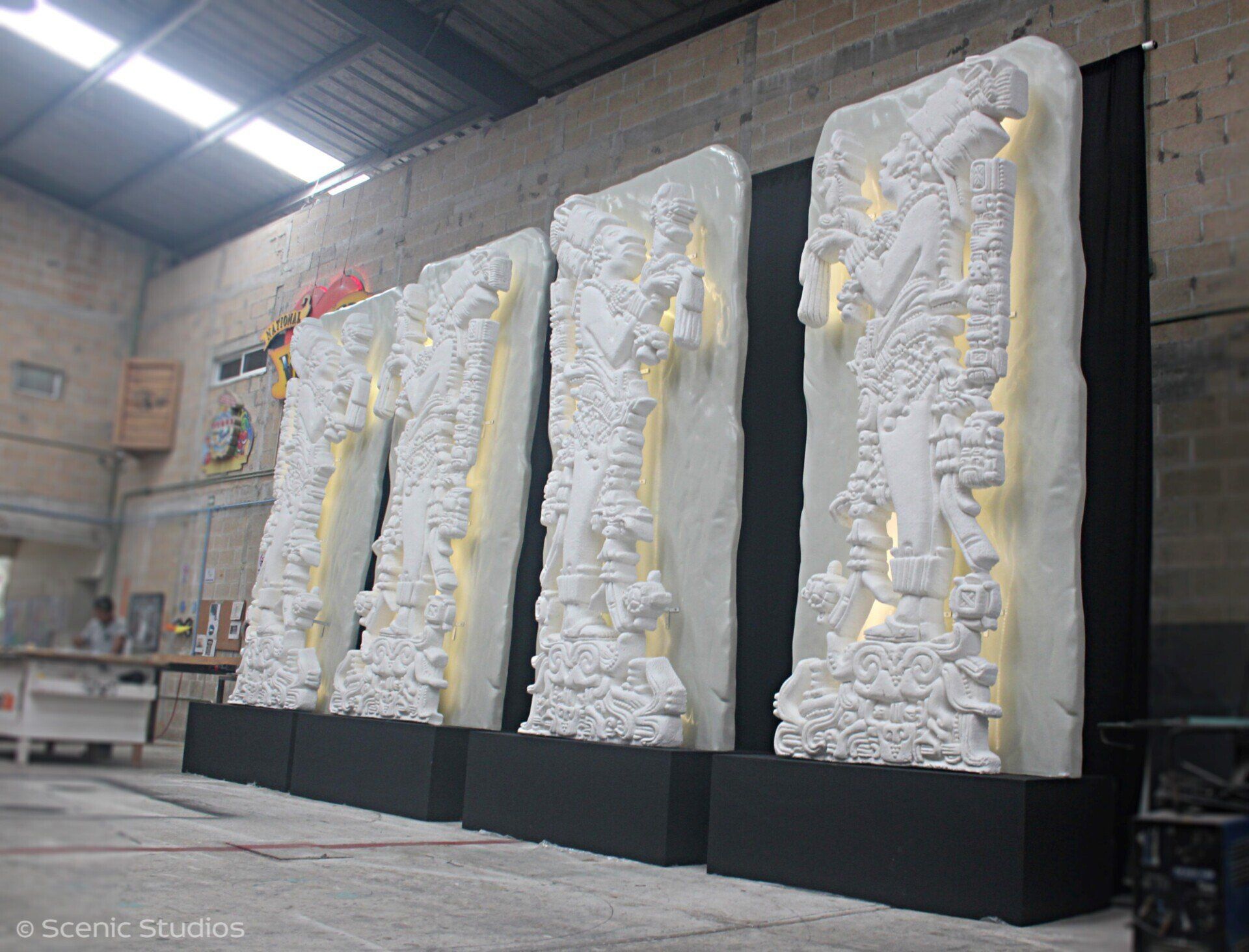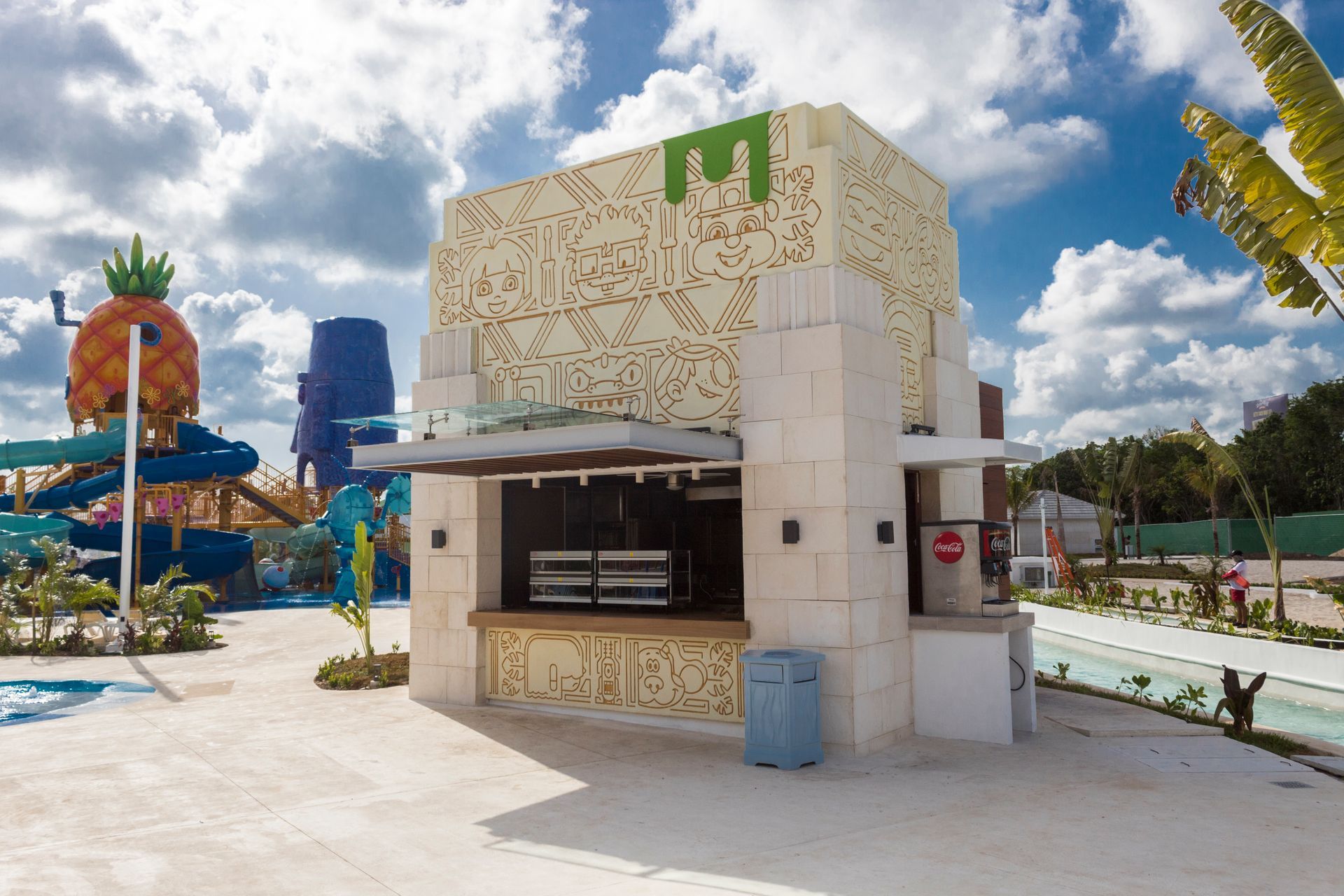


What is Polyurea and how is it used in themed fabrication?
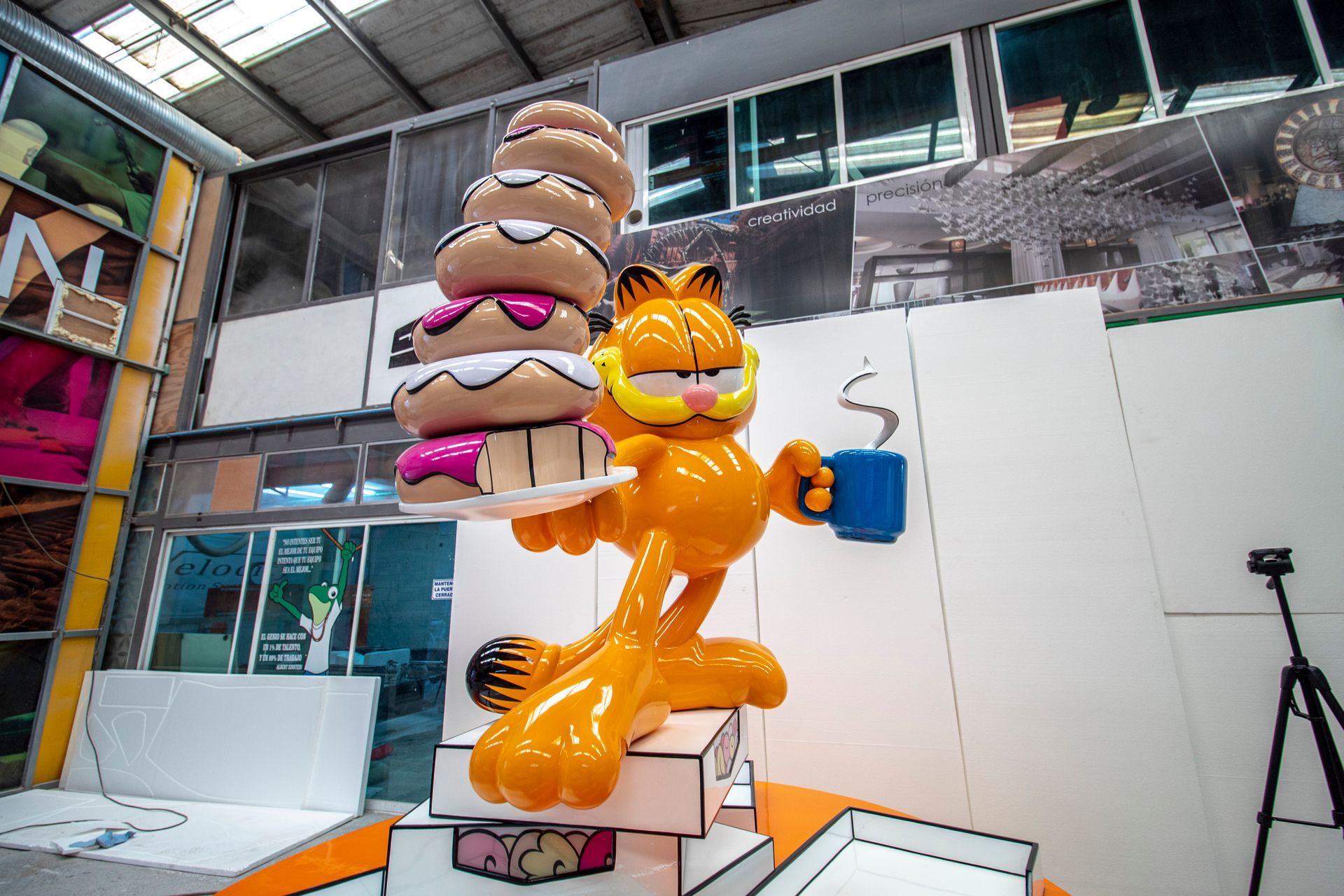
Polyurea is a synthetic, spray-applied coating that cures almost instantly, forming an elastic, waterproof, corrosion-resistant layer. In themed fabrication, it's used mainly to protect and waterproof pieces that will be exposed to the elements, heavy use, or direct contact with the public — from outdoor sculptures to themed elements in parks and hotels.
It's one of the least-known materials outside the specialized fabrication industry, yet one that has the biggest real impact on a piece's actual lifespan.
Why Is Polyurea Used in Themed Fabrication?
Strength and waterproofing
Polyurea forms a continuous, seamless membrane that blocks water penetration — critical for outdoor pieces exposed to rain, humidity, or proximity to the sea, a constant condition for projects located in Cancún and the Mexican Caribbean.
Corrosion protection
When applied over metal structures, polyurea acts as a barrier against rust, extending the piece's lifespan without the need for frequent repainting.
Outdoor durability
Unlike conventional paint, polyurea resists impact, abrasion, and prolonged sun exposure without losing flexibility or adhesion — important for pieces that receive direct public contact, such as interactive sculptures or themed furniture.
Polyurea vs. Other Coatings
Compared to fiberglass (which gives the piece its shape and structural strength) or industrial paint (which provides color and aesthetic finish), polyurea serves a different purpose: it's the protective layer that preserves both over time. In practice, many projects combine all three: fiberglass for structure, polyurea for protection, and specialized paint for the visible final finish.
How We Apply It at Scenic Studios' Polyurea Workshop
We have a workshop dedicated exclusively to polyurea application within our 3,000+ m² facility in Cancún, integrated with our fiberglass, metalwork, and paint shops. This lets us apply the coating at the optimal stage of the fabrication process, before the final finish, without relying on an outside vendor or adding extra logistics time to the project.
Frequently Asked Questions
Can polyurea be painted over?
Yes. It's common to apply polyurea as a protective layer and then add the final paint finish on top of it.
Is polyurea visible on the finished piece?
Not necessarily. In most projects it's covered by the final paint finish, so it isn't visible to the eye — its role is structural/protective, not aesthetic.
What types of pieces use polyurea most?
Outdoor sculptures, scenic elements exposed to the elements, themed furniture, and pieces located in humid or coastal climates — which describes most of Scenic Studios' projects in the Mexican Caribbean.
Does your project need a durable, weather-resistant piece?